Air source heat pumps in Inverness & the Highlands
We arrange no-obligation surveys and quotes for air source heat pump installations across Inverness and the Scottish Highlands — from town centre flats and modern bungalows to rural crofts and remote homes. Interest-free credit up to £30,000, subject to status.
What kinds of Highland homes suit a heat pump?
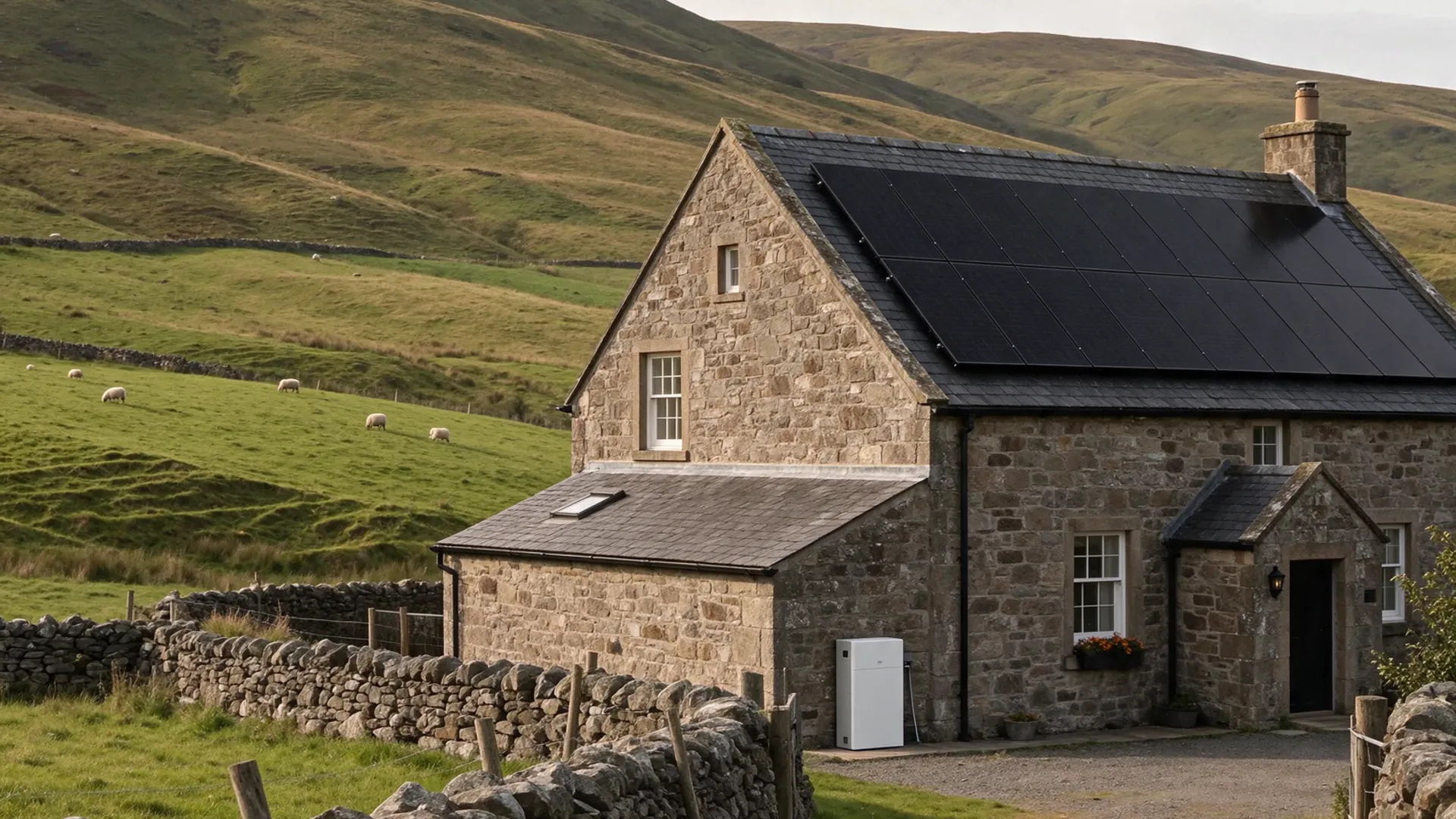
The Highlands range from Inverness flats and bungalows to stone cottages, crofts and remote detached homes. Many are older and harder to heat, but air source heat pumps work well across this stock when the survey accounts for the building's heat loss and the harsher outside design temperature used for Highland sizing.
Inverness itself has a mix of Victorian stone buildings in the city centre, post-war estates in areas like Culloden and Dalneigh, and modern developments expanding east and west. Beyond the city, the housing becomes increasingly rural — stone cottages in villages like Beauly and Drumnadrochit, crofts and farmhouses across Sutherland and Ross-shire, and remote detached homes scattered through glens. Each type has a different heat loss profile, and the survey sizes the system to match the building rather than the postcode.
How common are off-grid homes in the Highlands?
A large share of Highland homes are off the gas grid, relying on oil, LPG, electric heating or solid fuel. Air source heat pumps are particularly well suited to these properties, which often face high heating costs and fuel delivery challenges. The survey assesses the building and confirms the right system size.
The gas grid barely extends beyond Inverness and a few towns, so most of the Highlands is off-grid by default. If you heat with oil, you are dependent on road deliveries that can be disrupted by winter weather — exactly when you need heating most. LPG bottles and electric heating have their own cost and logistical challenges. A heat pump runs on electricity alone, removing fuel storage and delivery from the equation. The surveyor assesses your building's heat loss and confirms the system size needed for Highland conditions.
What insulation challenges do older Highland properties have?
Many older Highland cottages and crofts have solid stone walls, single glazing in some cases, and limited loft insulation. The survey assesses what is there and what could be improved. Reducing heat loss where possible before or alongside a heat pump helps the system perform well through long Highland winters.
Some rural Highland properties still have single-glazed windows, uninsulated loft spaces, and solid stone walls with no internal insulation. While you do not need to fully retrofit before a heat pump, improving loft insulation and upgrading windows where possible makes a measurable difference to the system size needed and its winter performance. The surveyor identifies what is present and what improvements would help most, so you can prioritise. Even partial improvements — thicker loft insulation, draughtproofing — reduce the heat load the pump has to meet.
How do Highland winters affect heat pump sizing and performance?
The Highlands experience the coldest and longest winters in Scotland, with deep frosts, snow and prolonged low temperatures. The survey uses a lower outside design temperature for Highland properties, so the heat pump is sized for the most demanding conditions. Weather compensation controls keep it efficient across the season.
A Highland winter is not just colder — it lasts longer. The heating season can run from October to April in exposed areas, with sustained sub-zero periods. The survey uses a significantly lower outside design temperature than for the Central Belt, so the heat pump is sized to maintain comfort when the glens are frozen and snow is on the ground. Weather compensation raises the flow temperature during cold snaps and lowers it in milder spells, so the system is not overworking in shoulder months but steps up when it matters.
Can I get a survey if I live in a remote Highland area?
We arrange surveys across the Highland council area wherever a surveyor can reasonably attend, including remote communities. Survey availability may take a little longer in more isolated locations. Contact us with your postcode and we will discuss timing and whether we can arrange a visit.
Remote access is a practical reality in the Highlands — some properties are miles from the nearest town on single-track roads. We arrange surveys wherever a surveyor can reasonably reach, and we will be honest about timing when you enquire. If access is challenging, we discuss it upfront. For a sense of what the survey and installation involve, see our how it works page, and for what influences the price, our costs page.
How do I arrange a survey in the Highlands?
Complete our quote form or call 0141 230 0198. A surveyor visits your Highland home where access allows, measures each room and assesses your heating set-up. You receive a written quote for an MCS-certified installation with no obligation. Interest-free credit up to £30,000, subject to status.
When you enquire, include your postcode so we can assess access and survey availability for your area. The surveyor measures each room, checks insulation and glazing, assesses your current heating and hot water set-up, and identifies the best location for the outdoor unit. You then receive a written quote covering everything identified, with no obligation to proceed.
Nearby areas we also cover
How do I get a no-obligation quote?
Arrange a survey for your home. We install through MCS-certified partners. Interest-free credit up to £30,000, subject to status. There is no obligation to proceed — you receive a written quote and decide in your own time.
Last updated: 30 October 2026. Reviewed by the Scottish Energy Efficiency team.
What should you read next?
What else do people ask?
My Highland cottage is off the gas grid — is a heat pump suitable?
Off-grid Highland homes are often among the strongest candidates for heat pumps, particularly those relying on oil or LPG with delivery and cost challenges. The surveyor assesses the building's heat loss, insulation and current heating. The system is sized for Highland winter conditions.
Can you survey homes in remote parts of the Highlands?
We arrange surveys across the Highland council area where a surveyor can reasonably attend, including remote communities. Availability may take longer in more isolated locations. Contact us with your postcode and we will confirm whether we can arrange a visit and discuss timing.
How does the colder Highland climate affect the system size?
The survey uses a lower outside design temperature for Highland properties than for the Central Belt, reflecting the colder and longer winters. This means the heat pump is sized to maintain comfort in the most demanding conditions. Weather compensation controls then keep it efficient across milder periods too.
Can I spread the cost in the Highlands?
Interest-free credit up to £30,000, subject to status. The finance option is discussed as part of your written quote.